
How to Put Testimonials in Your Sales Deck (So Prospects Hear It From a Customer, Not You)
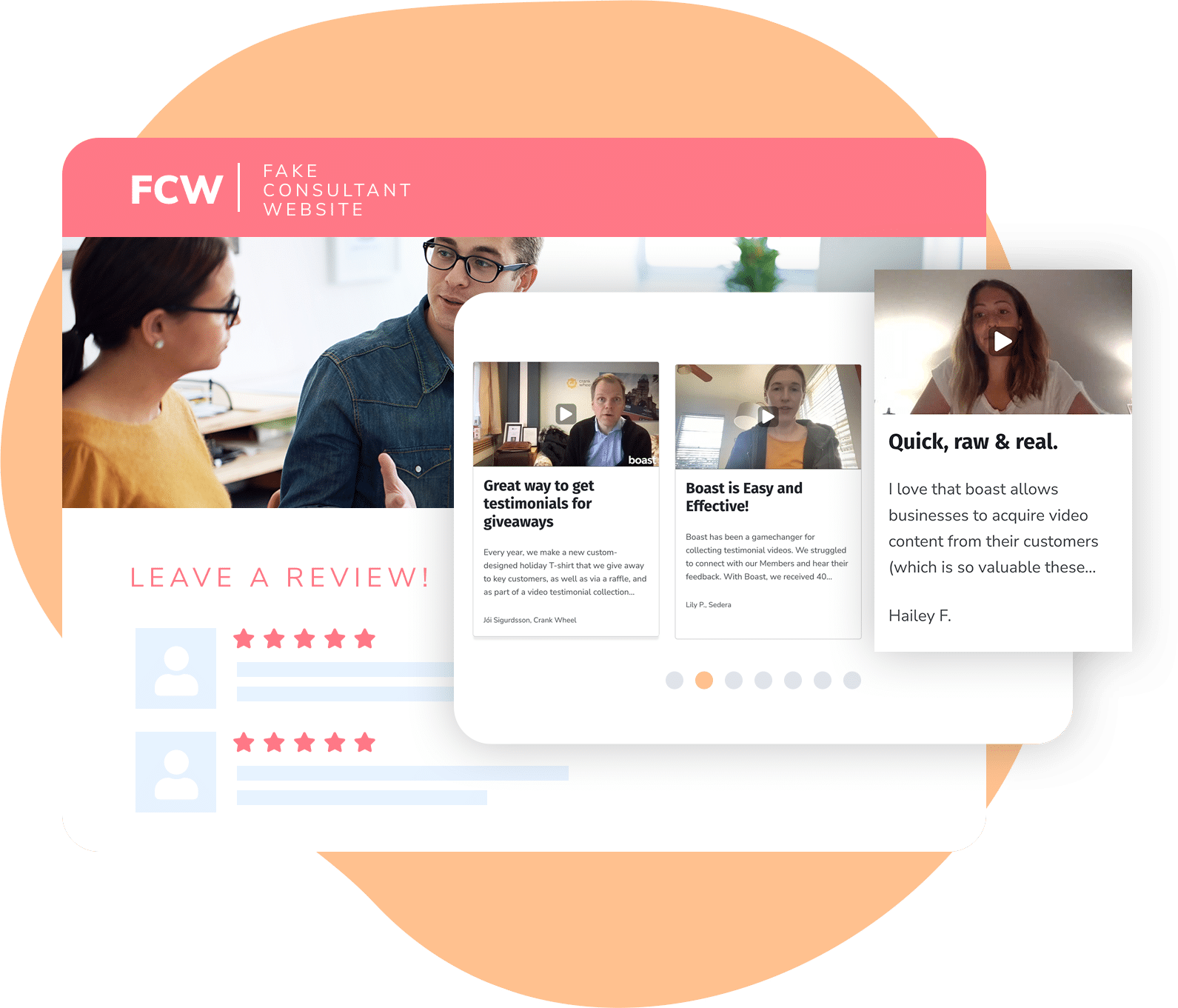
Every sales deck says the same thing: we're good, we're reliable, you'll love working with us. Your prospect has heard it all week. They nod. They don't believe it yet.
A customer saying it is different. Same claim, different speaker, and suddenly it's not a pitch. It's proof.
Most teams already have that proof sitting somewhere: a glowing email, a five-star review, a video someone recorded last spring. It just never makes it into the deck. Here's how to fix that.
Why testimonials belong in the deck, not just on the website
Your website works on strangers. Your deck works on people who are close to a decision. That's exactly when doubt is loudest. Will this actually work for a company like mine? What happens after I sign? Is this going to be a headache?
Those are the questions a sales rep can't fully answer, because the rep is paid to say yes. A customer isn't. When a prospect hears a peer describe the result in their own words, the risk feels smaller. That's what social proof does, and it does the most work right at the moment of decision.
This isn't a hunch. In Nielsen's 2021 Trust in Advertising study, 88% of people surveyed worldwide said they trust recommendations from people they know more than any other channel [1]. And Dr. Robert Cialdini, the psychologist who made "social proof" a household term, describes the principle this way: "Especially when they are uncertain, people will look to the actions and behaviors of others to determine their own" [2]. A prospect staring at your pricing slide is about as uncertain as people get.
If you've mapped the objections your team hears most (we wrote about common sales objections and how to answer them), you already know where testimonials go. Each one answers an objection.
Where to put customer stories in a deck
Don't save them all for one "What our customers say" slide near the end. By then, the prospect has already decided how much they believe you. Spread the proof through the story instead.
1. Right after the problem slide. You've just described the pain. Follow it with a short clip or quote from a customer who had that exact pain. "We were chasing people for weeks" lands harder from someone who lived it.
2. Next to your big claim. Wherever you say "fast setup" or "easy for your team," put a customer line right beside it that says the same thing in plainer words.
3. On the pricing or next-steps slide. This is where risk feels highest. A quote about the experience after signing ("onboarding was painless," "they actually answered the phone") calms the part of the brain that's about to say "let me think about it." The bigger the decision, the more the proof matters: research from Northwestern University's Spiegel Research Center found that reviews have a greater impact on purchase likelihood for higher-priced items than for cheaper ones [3].
4. As a closer. End with one short video. Thirty seconds. One happy customer, one clear result. Then stop talking.
Pick the right testimonial for each slide
Not every testimonial fits every deck. A few rules:
- Match the prospect. A real estate team wants to hear from a real estate team. A non-profit wants to hear from a non-profit. If you sell to several industries, build a small library of stories by vertical and swap them in.
- Specific beats glowing. "They're amazing!" is nice. "We stopped chasing testimonials by email and had a dozen videos by the end of the month" is proof. Look for details: a timeframe, a before-and-after, a named problem that went away.
- Short beats complete. On a slide, one or two sentences. In video, under a minute. You can link to the full story for anyone who wants more.
- Faces beat text. A video of a real person is harder to dismiss than a quote in a nice font. If you have it, use it.
Video or quote? Both, in the right place
Live presentations and video work well together: you hit play, the room watches a customer talk, and you didn't have to say a word. For decks that get emailed around and read alone, pair a still frame of the customer with a pull quote and a link to the full video.
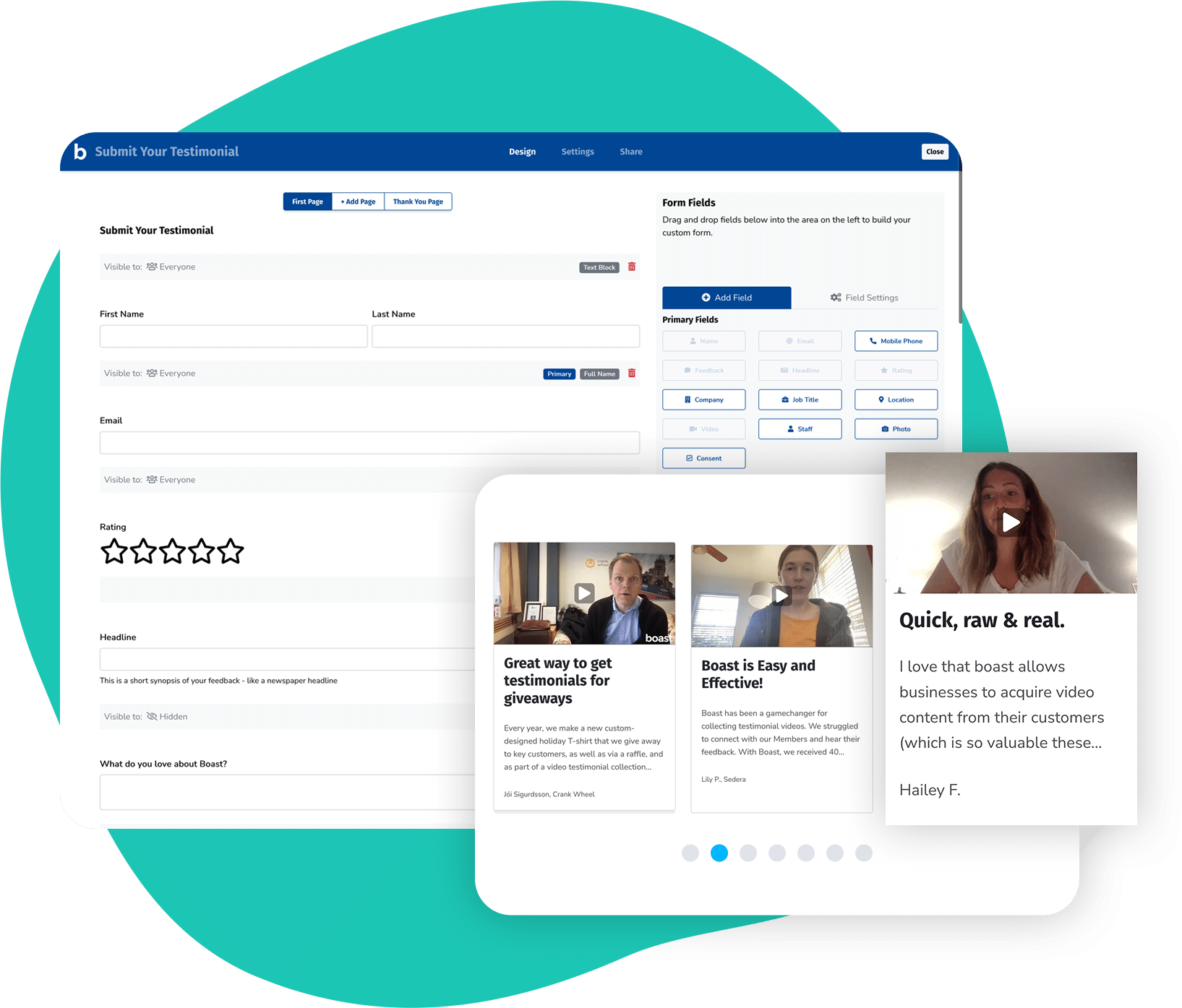
A practical tip: don't embed huge video files in your slides. Link to a single shareable response page instead. In Boast, every response can be shared on its own page (here's how to share a single response), so the deck stays light and the video always plays.
Keep the deck from going stale
The fastest way to lose credibility is a testimonial from four years ago, from a company that no longer exists, about a product you've since rebuilt. Proof has a shelf life.
Buyers notice dates. In BrightLocal's 2026 Local Consumer Review Survey, 74% of consumers said they only care about reviews written in the last three months [4]. A sales deck isn't a review site, but the instinct is the same: old proof starts to read like no proof.
Make it a habit:
- Review the testimonial slides every quarter. Swap in newer stories.
- Tag stories as they come in. By industry, by objection, by product. When a rep needs "a healthcare customer who talks about onboarding," it should take seconds to find.
- Keep collecting. A deck is only as fresh as the pipeline of stories feeding it. If you're still asking for testimonials one email at a time, it's worth building a repeatable testimonial strategy for your sales funnel so new proof shows up without anyone remembering to ask.
Get permission, and say who's talking
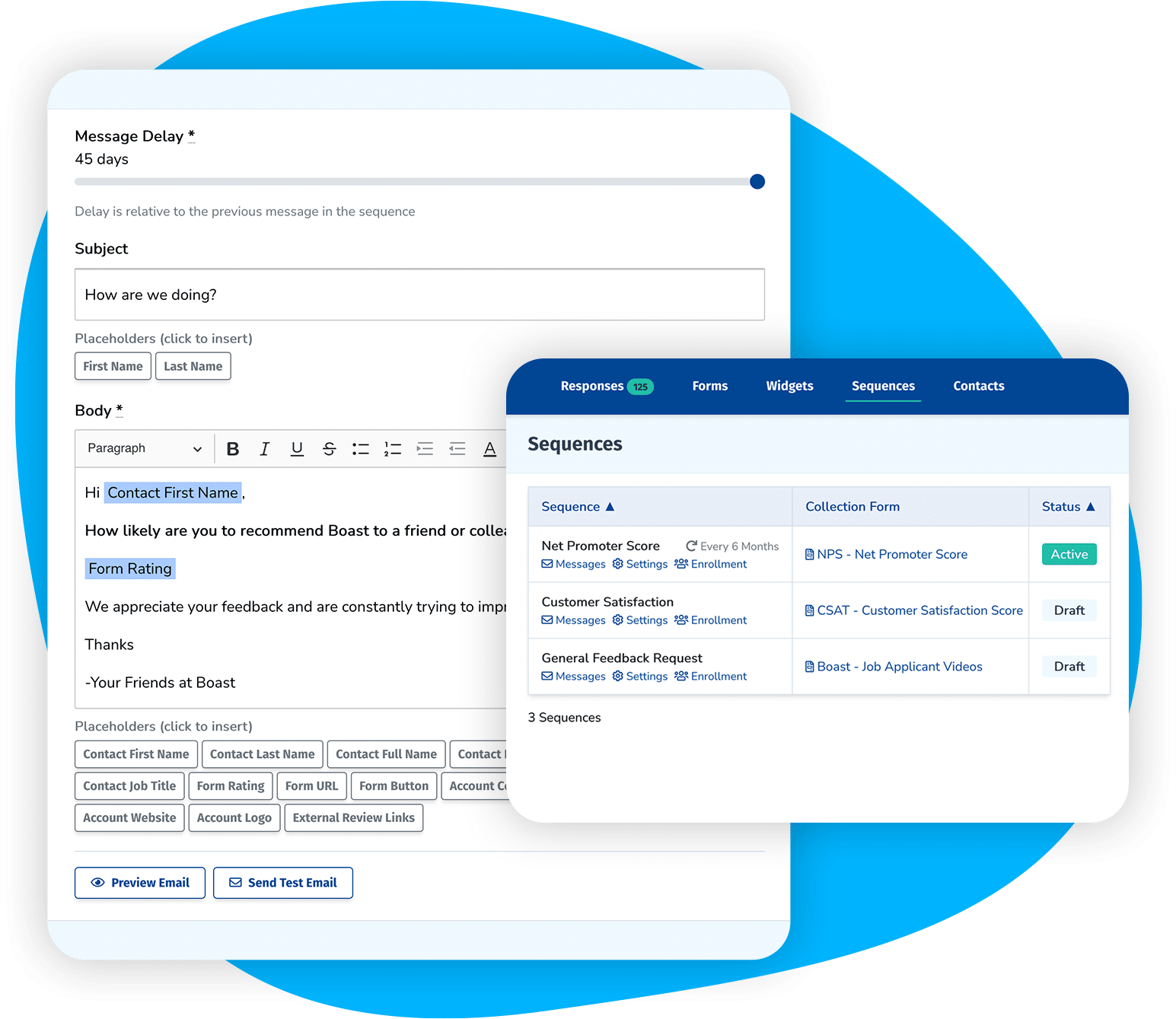
Before a testimonial goes in front of prospects, make sure the customer agreed to that use. Collection forms that capture consent up front save you an awkward email later. And always attribute: name, role and company where the customer has allowed it. An anonymous "happy client" quote reads like something you wrote yourself.
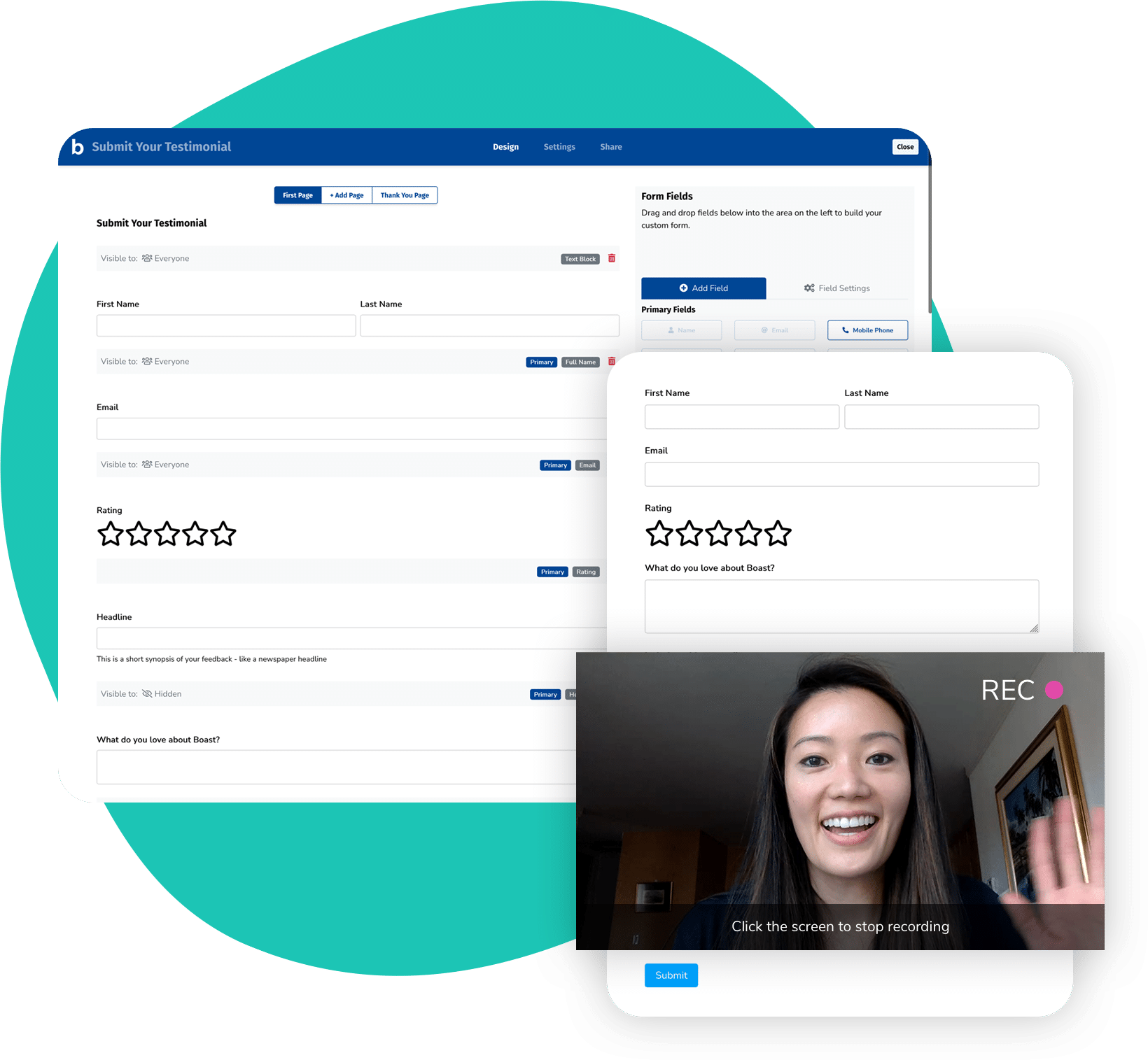
Keep their words theirs, too. When you trim a quote to fit a slide, don't trim it into something the customer didn't say. The U.S. Federal Trade Commission's Endorsement Guides put the standard plainly: "An endorsement must reflect the honest opinion of the endorser" [5].
A quick checklist for your next deck
- One customer story right after the problem slide
- A customer line next to every big claim
- Proof on the pricing or next-steps slide
- One short video to close
- Stories matched to the prospect's industry
- Nothing older than about a year
- Consent on file and clear attribution
Your reps are good. But your happiest customers are more convincing, because they have nothing to sell. Let them talk.
Want a steady supply of customer stories for your sales team? Boast collects video and written testimonials on any phone, follows up with reminders, and keeps every story organized in one library. Try it free for 14 days, no credit card required.
Sources
- Nielsen, "Beyond martech: building trust with consumers and engaging where sentiment is high" (2021 Trust in Advertising study), November 2021.
- Influence At Work, "Dr. Robert Cialdini's Seven Principles of Persuasion".
- Northwestern University, Medill Spiegel Research Center, "How Online Reviews Influence Sales".
- BrightLocal, "Local Consumer Review Survey 2026", February 2026.
- Federal Trade Commission, "FTC's Endorsement Guides: What People Are Asking".
 Testimonials
How to Build a Scalable Testimonial Strategy for Your Sales Funnel
Testimonials and reviews are critical to your sales process. Let's see how to gather and use testimonials throughout your sales funnel.
 Testimonials
How to Get Better Employee Testimonials
Let's explore strategies to get better employee testimonials that reflect your company and resonate with potential candidates.
 Testimonials
The Benefits of Video Testimonials You Need to Know
Let’s take a look at the advantages of video testimonials and how to use them to establish trust and outshine the competition.