

Artificial intelligence is becoming a part of many parts of life, including marketing. AI can be a powerful tool, but it has also been shown to be harmful in many ways. You can use it to draft emails, write landing pages, generate ad variations, analyze customer sentiment, and much more. So it’s no surprise that some businesses are now asking: Why not use AI to generate testimonials too? However, AI-generated testimonials can hurt your brand, your customers’ trust, and your business. Let’s explore.
What Are AI-Generated Testimonials?
First, what are AI-generated testimonials? There are many ways to use artificial intelligence, and there are some legitimate ways to use AI in social proof. So, let’s define what we mean by AI-generated testimonials and reviews.
On one end of the spectrum are fully fabricated testimonials, which might include quotes written entirely by AI that are attributed to fictional customers or to real customers who never said those words. These are the most risky.
In the middle are AI-enhanced testimonials, where AI edits, summarizes, or polishes real feedback from actual customers. Used responsibly, this can help clarify language while preserving authenticity.
On the safer end are testimonials or reviews which are repurposed by AI. In this case, genuine customer reviews can be used in social posts, ad copy, scripts, or condensed website snippets.
The risk lies not in using AI as a tool, but in using it to manufacture proof that doesn’t exist. Making up reviews or substantially changing the content of a customer’s statement is essentially deceiving potential customers and the public. This is not a legitimate, legal, or good use of AI tools.
Can AI-Generated Testimonials Hurt Your Brand?
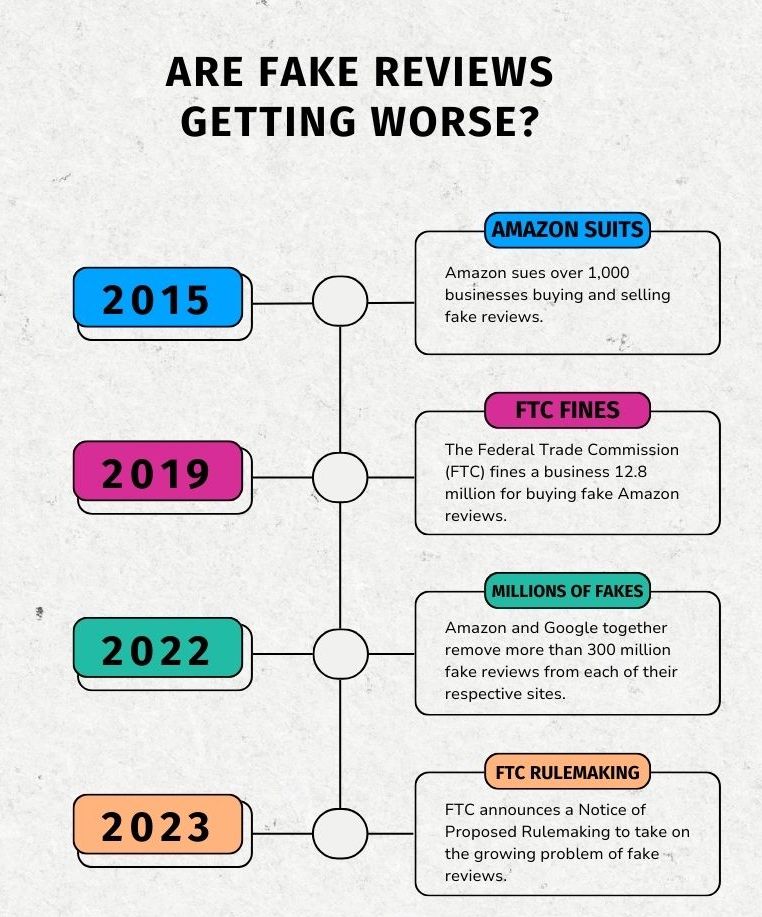
At first glance, it may seem efficient to use artificial intelligence to generate social proof. This is especially true if you’re launching a new product, redesigning your website, or making another change. Increasingly, fake reviews have inundated popular websites like Amazon, Google, and many more, and AI programs have only made this problem worse.
AI can quickly produce glowing reviews that sound polished and persuasive. But before you take that shortcut, it’s worth asking a more important question: What happens if your audience finds out those testimonials aren’t real?
AI-generated testimonials can absolutely hurt your brand, sometimes in ways that are difficult to recover from.
Get real testimonials, fast and easy
Start a free trial of Boast today >
The Trust Problem

Testimonials work because they signal something powerful: real people have taken a risk on your business and were happy with the result. That signal reduces uncertainty for the next buyer.
When businesses publish a fabricated testimonial, they are manufacturing that signal. If a customer suspects a testimonial is fake—whether because it sounds generic, overly polished, or impossible to verify—doubt creeps in. And doubt spreads.
Once customers question their trust in a business, it rarely stays confined to one part of your brand. If a prospect believes you’re willing to fake social proof, they may begin to wonder what else is embellished. Are your case studies real? Are your metrics accurate? Are your claims inflated? Trust erodes, and customers aren’t likely to stick around.
Legal and Compliance Risks
Beyond reputation, there are legal risks. Fake testimonials are illegal under 15 US Code § 45. The Federal Trade Commission in the United States have clear guidelines around endorsements, disclosures, and deceptive marketing practices.
If you operate in regulated industries like healthcare, finance, or legal services, the stakes are even higher. Misrepresenting customer experiences could expose you to fines, penalties, or legal disputes.
Even if enforcement never becomes an issue, the reputational damage of being publicly called out for fake testimonials can far outweigh any short-term marketing gain.
Generic Praise Doesn’t Convert
There’s also a practical marketing downside. AI-generated testimonials struggle to sound authentic, real, or human. One of the hallmarks to help recognize AI-generated reviews is their broad praise, often lacking details.
Real testimonials, by contrast, include specifics. They mention timelines, measurable outcomes, frustrations that were solved, and the emotional relief that came with resolution. They contain small imperfections that make them believable.
Buyers read a lot of reviews. By now, most of us on the internet are also quite familiar with AI output as well. We can sense when language feels templated or overly polished. Ironically, the very smoothness that makes AI-generated testimonials sound professional can also make them less persuasive.
The Psychology Behind Authentic Social Proof

Social proof works because humans look to others when making decisions under uncertainty. When prospects see someone similar to themselves sharing a real outcome, they mentally simulate that success.
Authenticity strengthens that effect. A testimonial that includes a customer’s name, company, role, and a detailed description of their challenge creates relatability. It lowers perceived risk. When testimonials feel fabricated or exaggerated, that psychological mechanism breaks down. Instead of reducing uncertainty, they increase it.
In an era where AI-generated content is becoming more common, authenticity itself is becoming a differentiator.
You don’t have to fake reviews
Start a free trial of Boast today >
How to Use AI Appropriately
This doesn’t mean you have to avoid AI entirely. In fact, AI can strengthen your testimonial process when used correctly.
There are many ways to use AI to save you time and make your marketing more effective. Here are a few of the ways that AI can help you save time and improve your marketing strategy:
- Analyzing patterns in customer feedback and identify recurring themes.
- Summarizing long interviews into digestible website copy while preserving the customer’s original intent.
- Drafting outreach emails that help you request testimonials more effectively.
- Repurposing genuine testimonials into ad variations, social media snippets, or email campaigns.
A Better Alternative: Build a System for Real Testimonials
If you’re feeling the pressure to rely on AI to gather social proof, the solution isn’t to fabricate proof. It’s to build a repeatable system for collecting it.
That might mean asking for feedback at defined milestones in your customer journey. It might mean incorporating testimonial requests into your onboarding or offboarding processes. It could mean conducting short video interviews that capture emotion and nuance in ways text never could. Creating a process, especially if it can be automated to save time, to gather testimonials will help you grow your brand over time, not just in the short term.
Authenticity Is a Long-Term Advantage
AI is transforming marketing at an incredible pace. As a business owner, it makes sense to look for ways to leverage it. But not all shortcuts are strategic, and not all uses of AI are positive.
Your brand is one of your most valuable assets. It represents trust, credibility, and reputation built over time. Fabricating testimonials, even if it seems harmless, puts those valuable asset at risk.
In a world where AI can generate almost anything, authenticity becomes more valuable, not less. The companies that win long-term won’t be the ones that simulate trust.
Boast is the only Proof-Based Marketing platform.
Join 8,000+ organizations embracing Proof-Based Marketing to build trust, improve customer relationships, and increase sales. Start collecting feedback and sharing praise in minutes.

Boast is the only Proof-Based Marketing platform.
Join 8,000+ organizations embracing Proof-Based Marketing to build trust, improve customer relationships, and increase sales. Start collecting feedback and sharing praise in minutes.
Boast is the only Proof-Based Marketing platform.
Join 8,000+ organizations embracing Proof-Based Marketing to build trust, improve customer relationships, and increase sales. Start collecting feedback and sharing praise in minutes.
Boast is the only Proof-Based Marketing platform.
Join 8,000+ organizations embracing Proof-Based Marketing to build trust, improve customer relationships, and increase sales. Start collecting feedback and sharing praise in minutes.
Boast is the only Proof-Based Marketing platform.
Join 8,000+ organizations embracing Proof-Based Marketing to build trust, improve customer relationships, and increase sales. Start collecting feedback and sharing praise in minutes.
Boast is the only Proof-Based Marketing platform.
Join 8,000+ organizations embracing Proof-Based Marketing to build trust, improve customer relationships, and increase sales. Start collecting feedback and sharing praise in minutes.
Boast is the only Proof-Based Marketing platform.
Join 8,000+ organizations embracing Proof-Based Marketing to build trust, improve customer relationships, and increase sales. Start collecting feedback and sharing praise in minutes.
Boast is the only Proof-Based Marketing platform.
Join 8,000+ organizations embracing Proof-Based Marketing to build trust, improve customer relationships, and increase sales. Start collecting feedback and sharing praise in minutes.
Boast is the only Proof-Based Marketing platform.
Join 8,000+ organizations embracing Proof-Based Marketing to build trust, improve customer relationships, and increase sales. Start collecting feedback and sharing praise in minutes.
Posted in: Customer Feedback