

I have a better product. Why are customers buying from my lower-quality competitors?
It’s frustrating to watch a competitor that offers a lower-quality product or service continually gain sales and market share. Unfortunately, customers don’t necessarily choose the business with the best product.They choose the business that feels like the best choice to them. There are several reasons they might perceive this. Let’s explore why this might happen, and what you can do about it.
Why Customers Choose a Worse Product or Service
First, it’s important to recognize that “worse” is often subjective.
From your perspective, the competitor may offer lower-quality products, fewer features, less attentive service, or a solution that simply doesn’t perform as well. But your customers don’t necessarily have the same perspective.
They might not understand your products or services, or their advantages. They may place a higher value on price or convenience than you do. They may not realize your company exists at all. Or they may simply be looking for something different from what you offer.
The good news is that many of these problems can be addressed. Here are some of the reasons customers might choose a competitor—and what you can do about them.
Your Competitor Seems More Trustworthy

Imagine that a prospective customer is comparing two businesses. One has an impressive website, a long list of capabilities, and a business owner who says they provide excellent service. The other has hundreds of reviews, dozens of customer testimonials, compelling case studies, and a steady stream of customers talking about their experiences.
Which one feels safer?
Customers need evidence that you’ll deliver on your promises. Reviews, testimonials, star ratings, case studies, and other forms of social proof can provide that evidence. If you have less social proof, customers will be more cautious, and may choose your competitor. How can you solve this problem?
Show customers what your existing customers already know. Collect reviews, testimonials, customer stories, survey responses, photos, videos, and other forms of feedback and put them where prospective customers will see them. Your existing customers can often make a more convincing case for your business than you can make for yourself. The more evidence you can provide, the easier it becomes for a prospective customer to feel confident choosing you.
Get More Testimonials, Reviews, and Social Proof
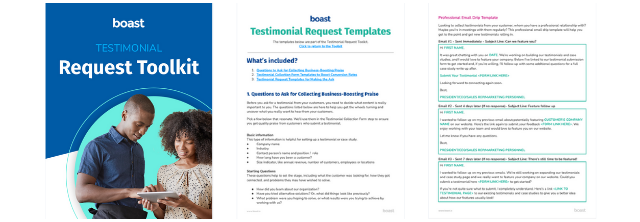
Download the Testimonial Request Toolkit
Customers Don’t Understand Your Product or Service Fully
You understand your product or service offerings inside and out. Your customers might not.
This is especially common with complicated products and services. Businesses often explain what something does without explaining why a customer should care. They use industry terminology, describe technical features, or bury important results in complicated content. Meanwhile, a competitor with a simpler explanation can make a similar offering seem much easier to understand.
The solution is to explain your offering from the customer’s perspective. Instead of simply describing what your product does, explain the problem it solves, who it’s for, and what the customer gets out of it. Ask someone who isn’t deeply familiar with your business to look at your website or marketing materials and explain your product back to you. If they can’t, that’s useful information. Sometimes the best way to make a product more compelling isn’t to add more information, but to make the existing information easier to understand.
Customers Aren’t Aware of Why Your Business Is Better
Your product may be more durable, longer-lasting, or have more features. Your service may be more helpful, attentive or effective. But your customers might not know about it.
Businesses sometimes assume that their competitive advantages are obvious. They’re not. A customer comparing several companies may see a list of businesses that all appear to offer roughly the same thing. If your differentiators aren’t clearly communicated, there’s no reason for the customer to recognize that you’re offering something different.
The solution is to clearly identify and communicate your competitive advantages. What can you do that your competitors can’t? Make those differences clear and easy to understand. If something genuinely makes your business better, tell them.
Featured Resource: Creator’s Guide to Collecting & Sharing Testimonials
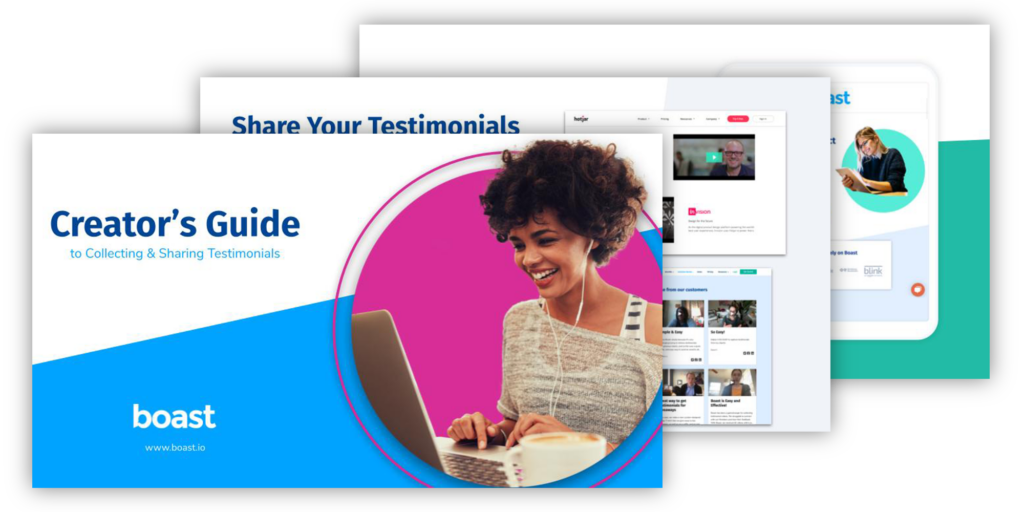
Download the Testimonial Guide for Creators!
Cost
Sometimes, the explanation is simply money.
You may offer a higher-quality product or a more comprehensive service, but some customers can’t or won’t pay for it. A customer might understand perfectly well that your product is better and still choose a less expensive alternative because the additional quality isn’t worth the additional cost to them.
That’s not necessarily a failure of your marketing. Different customers have different budgets and priorities. A business serving premium customers shouldn’t necessarily try to convince every price-conscious shopper to pay more.
The solution is to understand who your product is actually for and market to this audience. If you offer something more expensive because it provides meaningful advantages, explain what those advantages are and who benefits from them. Hone in on your ideal customer, and show testimonials and feature reviews from them. Determine the best methods to market to this customer, and what messages are most compelling to them.
Competitors Make Buying Easier

Sometimes, customers choose a competitor because that competitor simply makes it easier to purchase.
Maybe your competitor has straightforward pricing while your customers have to contact you for a quote. Maybe they offer three clearly defined packages while your website presents dozens of options. Maybe they have an obvious “Get Started” button while your website leaves customers wondering what to do next.
Even when your product is better, unnecessary friction simply makes it harder to purchase.
The solution is to look at the buying process from the customer’s perspective. Can they quickly understand what you offer? Can they figure out which option is right for them? Can they find pricing information, comparisons, examples, FAQs, and other information that helps them make a decision? And when they’re ready to talk to you, is it obvious how to do that? Making the buying process easier doesn’t mean removing everything that makes your business unique. It means removing unnecessary obstacles between a customer and the information they need.
Competitors Are “Good Enough”
Your product might genuinely be better. But that doesn’t mean every customer needs the additional quality.
Maybe your product is built to last for decades, but the customer only expects to use it for a few years. Maybe you offer dozens of advanced features, but the customer only needs three.
From your perspective, the competitor’s product might be inferior. From the customer’s perspective, it might be perfectly adequate.
The solution is to understand what your customers actually value. Find out what customers are trying to accomplish and which benefits matter most to them. Sometimes customers don’t need to be educated about your superior product or service. It may be that your business needs different positioning or even a bit of editing.
Customers Don’t Know You Exist

You can’t be chosen if you’re not considered.
This may be the simplest explanation for why a competitor is getting more sales. Customers may be familiar with the same two or three companies because those businesses have been around longer, spend more on marketing, appear prominently in search results, get more referrals, or have simply become the names people associate with the category.
Meanwhile, your business might offer an excellent alternative that never makes it onto the customer’s shortlist.
The solution is to become part of the conversation. That means identifying where your potential customers look for information and making sure your business is visible there. It could mean improving your website, creating useful content, investing in search, building relationships, participating in industry communities, encouraging referrals, or becoming more active on social media. The specific strategy will vary by business, but the underlying problem is the same: customers need to encounter your business before they can decide whether to choose it.
Your Product or Service Is Too Complicated
More isn’t always better.
You might offer more features, more customization, more service options, or more ways to solve a problem than your competitors. But every additional choice can create another opportunity for a customer to become confused.
A competitor that offers less may actually seem more appealing because the customer immediately understands what they’re getting. When someone is already overwhelmed by a decision, a simple option can be much more attractive than a comprehensive one.
The solution is to simplify the customer’s experience, even if your product itself is complicated. You don’t necessarily have to remove features or services. Instead, organize them in a way that makes sense to the customer. Explain which options are appropriate for different needs. Create packages or recommendations where appropriate. Use plain language. Your goal isn’t necessarily to make your business simpler. It’s to make choosing your business simpler.
The Customer Is Not Your Audience
This is another simple explanation, but some businesses don’t want to hear it: Not every customer is your customer.
If your business specializes in bespoke, handcrafted, highly personalized products, you probably aren’t the obvious choice for someone looking for the cheapest possible option. Likewise, if your business focuses on building long-term customer relationships, a person who simply wants the fastest possible transaction may prefer a competitor with a more transactional model.
The solution is to get clearer about who you serve best. Instead of trying to make your business appealing to everyone, identify the customers who genuinely benefit from what you offer. Then make your marketing speak directly to them. The goal isn’t to beat every competitor for every customer. It’s to make sure the customers who are a good fit understand why you’re a good fit for them.
Show That Your Business Is Better
If you’re watching a competitor gain customers despite believing that your product or service is better, it’s worth stepping back before assuming that customers simply don’t understand what they’re doing.
Ask yourself what customers are actually seeing.
Consider what misconceptions customers are dealing with. A poll, a survey, or even a few man-on-the-street interviews can help you gain valuable insight. Look at what customers are saying about your competitors on social media. Look at reviews and other social proof and see what you can improve to show the superior aspects of your business. Examine your marketing messaging and how you show your competitive advantages—is it clear? Making an honest assessment, talking to customers, and making changes can help show customers why they should choose you.
Posted in: Sales & Marketing