

What do customers want? And how do we know? Understanding customers’ expectations and needs will help you deliver a great experience. Data can tell us, generally, what customers want in 2025, so businesses can make changes accordingly. With this in mind, let’s take a look at the data and see what customers want in 2025.
The Top 5 Things Customers Want in 2025
Each person is different and it can be difficult to make accurate generalizations. However, data can give us some indications about what, generally, customers are thinking about, and how they’ll respond to different situations or business strategies. This data can then help businesses craft the right plans for marketing, customer service, customer retention, and more. Knowing, in general, what customers want will help you use your resources optimally and give your customers a better experience overall.
To take a look at customer trends in 2025, we examined Qualtric’s 2025 Global Consumer Trends Report, CapTech Consulting’s 2025 Consumer Innovation Survey Insights, and Forrester’s 2025 Predictions. Across these surveys, we were able to draw some conclusions about what customers want in 2025.
1. Deliver On Your Promises
This first point may seem obvious, but it’s more important than ever. Though inflation fell in 2023 and 2024, consumers are still experiencing an overall reduction in disposable income, or at least the feeling that essentials are more expensive. This trend is unlikely to change in 2025, and may in fact get worse. This means, with less disposable income, customers have strict standards about the way they spend their money. If their expectations aren’t being met, they’re more likely to go elsewhere.
According to Qualtrics’ report, over half (53%) of bad customer experiences result in reduced spending in 2025. If your product, service, or overall experience isn’t meeting customers’ expectations, they’re not going to continue to spend their money at your establishment.
Now more than ever, it’s important to deliver what you say you will deliver, be honest about your business, and try to fix problems if they occur.
Featured Resource: Testimonial Request Email Templates
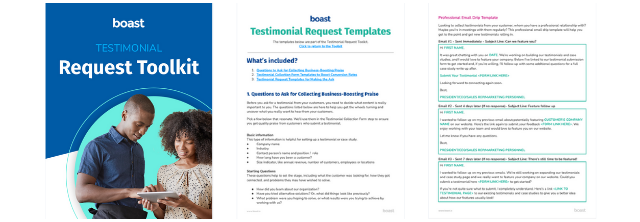
Download the Testimonial Request Toolkit
2. Make Improvements, Even Small Ones
Though data indicates that unmet expectations will result in reduced customer spending, it’s not impossible to improve a situation if a problem occurs. In fact, small improvements can have a big impact.
According to Qualtrics’ report, moving a customer’s experience from “poor” to “okay” increases their likelihood to purchase by 1.6 times and increases their likelihood to recommend the business by 2 times.
How can you make these small improvements? First, you’ll need to recognize what went wrong in a customers’ experience. And, they might not tell you outright (more on this later). It’s impossible to fix a problem you don’t know about, but you can make predictions and empower employees who work closely with customers. Odds are, these employees will know about problems or issues, even if customers won’t tell business managers what went wrong.
Consider these solutions to make small improvements in 2025 and deliver an unproblematic experience, even if it isn’t stellar.
- Empower employees: Employees who work directly with customers have the greatest ability to turn a bad experience into an “okay” one. Give your employees the tools, leeway, and autonomy they need to assess a situation and solve it.
- Consider with neutrality: You may already know which things are most likely to make a bad customer experience. Analyze these factors or processes to find out why they go wrong. Try not to panic, assign blame, or get frustrated. Instead, assess the process or situation with neutrality; what happens to cause a bad outcome? What resources are required to reduce the chances of this bad outcome? Perhaps employees need more time, more help, or different tools.
- Ask questions and solve problems: Customers might not always tell you when they had a bad experience, but many will if you ask. Use after-purchase surveys, periodic emails, written in-store surveys, or other strategies to efficiently check in with your customers and ask them how their experience went or how it’s going.
3. Get Creative With Customer Feedback
According to Qualtrics, customers are less likely to tell you if they had a bad experience. The company stated, “Since we began this consumer study 4 years ago, customer feedback after a bad experience has dropped 8 percentage points… if organizations want to understand how to improve the experiences they deliver, it’s no longer enough to rely on surveys — they must diversify their listening program.”
Customers are still providing feedback, just not to the business itself. The same report noted, of the consumers polled, “45% told friends or family about (their experience) directly, 32% sent feedback directly to the company, 22% put a comment or rating about the company on a 3rd party ratings site, 16% posted something about it on social media site” (note that customers might provide multiple types of feedback, so percentages will add up to more than 100%).
So, customers are telling someone about their experience, they’re just less likely to tell the business itself.
What can you do? You’ll need to get creative with how you measure customer feedback.
This might involve monitoring social media to see what customers are saying about your brand. Or, see if you can get a glimpse into relevant forums on sites like Reddit, or relevant community groups on Facebook. Or, it might mean asking them in-person, where possible, about their experience. You might also use paper surveys, since physical objects tend to have more importance in our minds than emails. You might also consider incentivizing some feedback by providing discounts or rewards.
4. Loyalty Programs That Actually Work

Customers are going to be more sensitive to experiences that don’t meet their expectations, but there is a way to improve customer loyalty. According to Cap Tech, in 2025, loyalty programs will become more important, with 90% of digital users enrolled in a loyalty program and 95% reporting them as influential in their shopping choices. However, it’s important to design a loyalty program that actually offers benefits, otherwise consumers won’t stick around.
Discounts may be the best way to give your customers a valuable loyalty program, and actually incentivize them to stay with your brand. There are other rewards you might provide as well, such as exclusive experiences, which Gen Z favored in the survey. This might include first access to a new product or offering, or a VIP experience or special event.
Featured Resource: 5 Survey Templates + Customer Feedback Strategy Guide

Download the Customer Feedback Strategy Toolkit
5. Trust and Clear Communication
Now more than ever, customers want trust and clear communication. 61% of consumers cited trust and clear communication as their top priority when interacting with businesses. This can cover a wide range of interactions, from making a purchase or a reservation, asking a question, getting shipping details, wondering how a product works, and much more.
When you clearly communicate how your business, product, or service works, how you handle or respond to certain situations, the best-use-case for your product or service, and expected results, your customers are less likely to have their expectations unmet. It’s also important to keep your customers updated; this might include telling them if their order is delayed, if their favorite product will soon be unavailable, or if they can look forward to a discount soon. When you are clear about how you do business and customers can believe what you say, you can feel more confident about delivering a great experience.
Boast is the only Proof-Based Marketing platform.
Join 8,000+ organizations embracing Proof-Based Marketing to build trust, improve customer relationships, and increase sales. Start collecting feedback and sharing praise in minutes.

Boast is the only Proof-Based Marketing platform.
Join 8,000+ organizations embracing Proof-Based Marketing to build trust, improve customer relationships, and increase sales. Start collecting feedback and sharing praise in minutes.
Boast is the only Proof-Based Marketing platform.
Join 8,000+ organizations embracing Proof-Based Marketing to build trust, improve customer relationships, and increase sales. Start collecting feedback and sharing praise in minutes.
Boast is the only Proof-Based Marketing platform.
Join 8,000+ organizations embracing Proof-Based Marketing to build trust, improve customer relationships, and increase sales. Start collecting feedback and sharing praise in minutes.
Boast is the only Proof-Based Marketing platform.
Join 8,000+ organizations embracing Proof-Based Marketing to build trust, improve customer relationships, and increase sales. Start collecting feedback and sharing praise in minutes.
Boast is the only Proof-Based Marketing platform.
Join 8,000+ organizations embracing Proof-Based Marketing to build trust, improve customer relationships, and increase sales. Start collecting feedback and sharing praise in minutes.
Boast is the only Proof-Based Marketing platform.
Join 8,000+ organizations embracing Proof-Based Marketing to build trust, improve customer relationships, and increase sales. Start collecting feedback and sharing praise in minutes.
Boast is the only Proof-Based Marketing platform.
Join 8,000+ organizations embracing Proof-Based Marketing to build trust, improve customer relationships, and increase sales. Start collecting feedback and sharing praise in minutes.
Boast is the only Proof-Based Marketing platform.
Join 8,000+ organizations embracing Proof-Based Marketing to build trust, improve customer relationships, and increase sales. Start collecting feedback and sharing praise in minutes.
Posted in: Customer Feedback, Customer Loyalty