

Every business wants to see positive reviews. Customer review statistics show that 77% of buyers research reviews before a purchase, and 90% say what they read makes or breaks their buy. With this level of influence, many businesses try to “bend” testimonial guidelines. What’s the worst that could happen?
Besides lost customers and a tarnished reputation, unethical businesses also risk prosecution from government agencies like the Federal Trade Commission (FTC). Simply put, unethical practices aren’t worth it. So how do you gather testimonial or beat back bad reviews without crossing the line? These testimonials guidelines answer the most common questions about collecting and showing reviews lawfully. We’ve updated this post in 2025 to stay current with the latest practices and provide guidelines on posting testimonials to social media.
This isn’t a comprehensive list or legal advice; if you’re uncertain, always consult an attorney.
Testimonial Guidelines: The 12 Biggest Questions
1. Is Making Up Testimonials Illegal?
Yes.
Making up testimonials is illegal. Some businesses are tempted to make up testimonials if they don’t have any, or have bad ones. However, using fake testimonials is not only false advertising, it’s fraud. The FTC, Department of Justice, consumer protection groups and other organizations can impose thousands in fines, fees, and even jail time.
According to 15 US Code § 45, the Federal Trade Commission (FTC) exercises authority over advertising and similar activities. This means it can stop and penalize businesses “using unfair or deceptive acts or practices in or affecting commerce.” That includes fake testimonials or reviews. The FTC further states, in a Truth in Advertising statement, “When consumers see or hear an advertisement, whether it’s on the Internet, radio or television, or anywhere else, federal law says that ad must be truthful, not misleading.”
The bottom line is, making up testimonials isn’t worth it. The number one testimonial guideline is this: testimonials should be honest statements made by real customers, no exceptions.
2. Can I Bend the Truth?
No.
Using testimonials that exaggerate the truth or make misleading statements is false advertising. Customer testimonials should always be an accurate representation of your business. Some businesses may ask customers to exaggerate, or some customers may unknowingly make false claims—both of these are false advertising. While you can’t police every review site, you are expected to only use true testimonials on your website or marketing materials. If a customer makes a claim about your business that isn’t true, don’t use that testimonial, or ask them if they can rephrase.
3. Can I Tell Customers What To Say?
No.
You can’t tell your customers what to say in a testimonial. The FTC makes clear that testimonials “must reflect the honest opinions, findings, beliefs, or experience of the endorser” (FTC 16 CFR Part 255). While it’s okay to pose questions about your business or make suggestions to make customers more comfortable, you cannot tell your customers what to say.
Featured Resource: Testimonial Request Email Templates
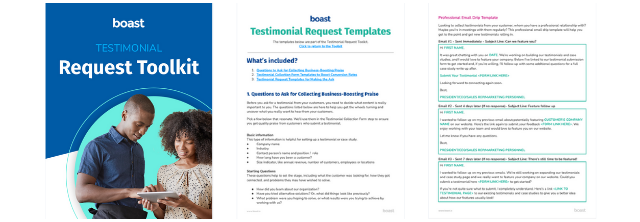
Download the Testimonial Request Toolkit
4. Can I Leave Out The Bad Parts?
No.
Omitting the unflattering parts of a testimonial or review means distorting the message, which is false advertising. You don’t have to use the exact words of the testimonial, but the testimonial “may not be presented out of context or reworded so as to distort in any way the endorser’s opinion or experience.” There are better ways to handle negative feedback than covering it up.
5. Can I Ask For Testimonials?
Yes, in most cases.
Under U.S. law, it’s perfectly legal to ask your customers to submit testimonials. In most cases, asking for testimonials is the best way to gather them. Happy customers are your best ambassadors, and asking them to give their honest opinion is perfectly lawful. You might ask for a testimonial in an email, phone call, or in person.
In most cases, there’s no problem with asking for testimonials. However, some specific, third-party review sites may have different rules. This practice would not be governed by a law or regulation, but rather by the site’s or app’s terms and conditions. If you are working with a third-party review source, take a look at their terms and conditions before asking for reviews specifically on that platform.
6. Can I Pay For Testimonials (Not on Third-Party Sites)?
Yes, with disclosure.
You can incentivize customers to give testimonials, however the testimonial must still be true and made by a real customer. The payment—or “material relationship,” according to the FTC—must also be clear to potential customers reading or viewing the testimonial.
Note: Most Websites Do No Allow You to Pay for Testimonials or Reviews
It’s important to note that, while the FTC does allow businesses to pay for honest testimonials and reviews, most review websites do not. Google, Amazon, Yelp and others all expressly forbid paying for or incentivizing reviews. Paying or otherwise incentivizing customers to leave reviews on these sites violates the sites’ terms of service, and you may be banned from the site.
7. Can I Give Out Free Products For Testimonials?
Yes, with disclosure.

The FTC puts gifts, such as a free sample or a free trial, in the same “material relationship” category as payments. However, this practice is common and doesn’t necessarily detract from the testimonial. If you give a customer a free trial or free product, it’s okay to request a review, but be sure this is clear to potential customers who may see the review.
Note: Most Websites Don’t Allow You to Offer Free Products for Testimonials
Most review sites don’t allow businesses to pay customers for reviews, and also don’t allow businesses to give free products, discounts, or other incentives. If you do incentivize customers in this way and ask for reviews on third-party sites, you might get banned from the site.
8. Can I Ask For a Testimonial In The Store?
Yes.
This might be the perfect way to collect quality customer testimonials. These should be as spontaneous as possible, and customer’s opinions shouldn’t be influenced by the chance to be on TV or in an advertising video. Always get the customer’s permission before using their testimonial (see below).
9. Can I Include My Customer’s Name in the Testimonial?
Yes, with permission.
Including a name, picture or video with the testimonial makes it more trustworthy, but you must get your customer’s permission first. This is not only a legal requirement, but it will also make your customers more comfortable. Never include your customers’ email address, phone number, or other contact information.
Featured Resource: Testimonial Request Email Templates
Download the Testimonial Request Toolkit
10. Can I Put Third-Party Reviews On My Website?
Usually no.
Most websites and apps that host reviews and testimonials don’t allow you to put them on your website. This is a commonly misunderstood testimonial guideline. Many businesses will copy and paste reviews from other sites onto their own websites. Though these are, presumably, honest reviews from real customers, they technically belong to the customer and the site hosting them. Reusing them is copyright infringement.
This is true for all third-party review websites, including Amazon, Google, and other sites. However, several plugins allow you to show reviews in their source format on your website, which may be acceptable. It’s a good idea to check the website’s terms and conditions before using this strategy.
11. Can I Share Customer Testimonials in my Promotions?
Yes, with permission.
When you gather customer testimonials yourself (not from another website, like Google or Amazon), you can use these customer testimonials anywhere, as long as you get your customer’s permission to do so. You’ll need your customer to physically or digitally sign a testimonial release form.
In the release form, tell your customers how you plan to use their testimonial, such as sharing it on social media, using it in a promotional video, or something else. Remember that your promotional plans might change later down the road, so it’s helpful to include a clause that covers multiple different promotions. Customize this testimonial release form template to include your preferred promotions and any other clauses you might need.
12. Can I Share Customer Testimonials on Social Media?
Yes, with permission and disclosure.
With your customer’s permission, you can share these testimonials on social media. This is a great way to extend the reach of your testimonials and reach new audiences. As previously mentioned, you have to get your customer’s permission before sharing their testimonials on social media. If you provided money or other incentives for this customer, or if you have a paid relationship with an influencer, it’s important to disclose this clearly when you or the customer makes the post. You might explain this in the post, or use hashtags like #ad or #sponsored.
The FTC, other government branches, consumer protection groups, and other organizations make strict laws about testimonials, however this shouldn’t be cause for alarm. Ask respectfully for your customer’s honest opinion, and tell them where and how you plan to use the testimonial. If a practice seems dishonest, don’t do it. The best testimonial guidelines are honesty and transparency; you won’t land in legal hot water and your customers will appreciate your integrity.
